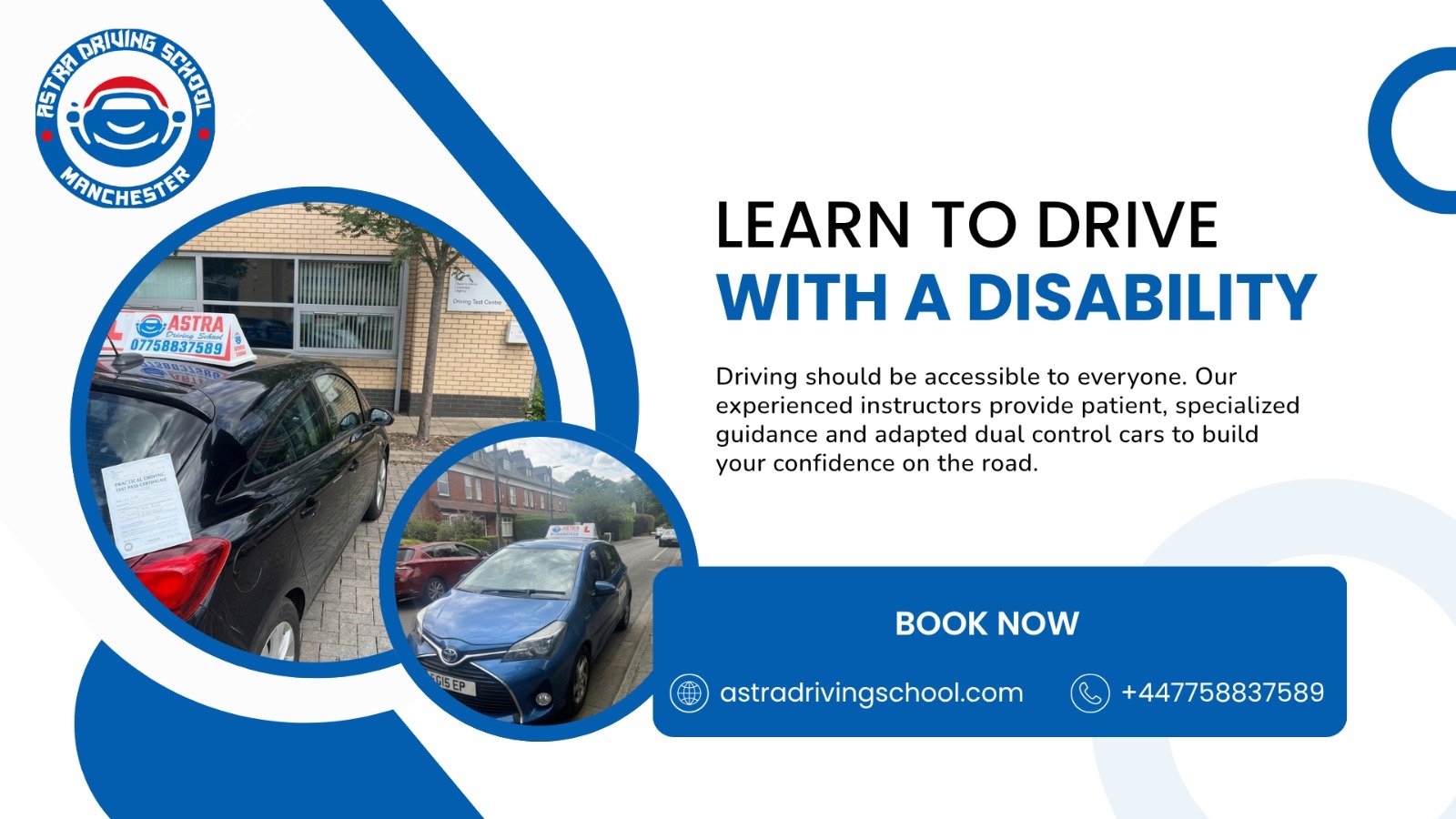
The drive to learn is difficult enough without wondering If or not your body will allow you to do it the normal way. If you are disabled, or you are supporting someone, the honest answer is: yes, you almost surely can learn to drive. The process just looks a little different, and understanding what to expect before you start makes the whole thing a lot less stressful
This guide walks through what learning to drive with a disability UK-wide actually involves, with a specific look at what’s available here in Manchester.
You Don’t Need to Figure This Out Alone
A lot of learners with disabilities assume they have to sort out every detail themselves before they can even book a lesson, which car, which adaptations, which instructor. You don’t. The system is set up so that a proper assessment happens first, and everything else follows from that.
The starting point for most people is a Mobility Road Safety mobility assessment, sometimes called a driving assessment centre visit. These are run by trained professional therapists who look at your physical range of movement, reaction times, coordination, and any specific limitation that may affect how you can control a car. They are not there to tell you if or not you are allowed to drive; that is the DVLA’s job, but to work out what kind of vehicle adjustment, if any, would help you to drive safely and relaxedly
There’s one in Manchester, and assessments typically take a couple of hours. You’ll come away with a written report that your instructor and the DVLA can both use.
Telling the DVLA
Depending on your condition, you need to Inform the DVLA before you start lessons, or before you apply for a provisional licence. Conditions like Neurological disorder Surely visual impairments, and some neurological or heart conditions fall under this requirement. Others do not need to be announced at all
It is worth checking the DVLA’s list of Informative conditions directly rather than guessing because getting this wiring even genuinely can cause problems later with your licence or insurance. If you are unsure, you GP the Assessment Center can usually point in the right direction
What Adapted Lessons Actually Look Like

Adapted driving lesson covers a huge range of things, because disabilities themselves vary so much. A few common adaptations:
- Hand controls instead of foot pedals, for learners with limited leg mobility or strength
- Left-foot accelerators, often used by drivers with right-side mobility limitations
- Steering aids, such as a spinner knob, for those with limited grip or one-handed steering
- Extended or adjusted mirrors for learners with restricted neck movement
- Automatic transmission, which removes the need for a clutch and is often recommended even for learners without a specific requirement for it, simply because it reduces the number of things to coordinate at once
Not every learner needs all of these, or any of them. Some people need one small adjustment. Others need a fully adapted vehicle from day one. Your assessment report will usually specify exactly what’s recommended, and a good instructor will build lessons around that rather than trying to guess.
Finding the Right Instructor in Manchester
This is where things can get disappointing if you do not know what to look for. Not every driving instructor has experience teaching disabled learners, and that is fine; identify it is a Expert skill, not something every ADI picks up automatically
What you’re looking for is an instructor who either has a car already fitted with the adaptations you need, or who’s willing to work with a vehicle that’s been fitted for you. Some instructors in Manchester specialise specifically in disability driving tuition and will have hand-control or automatic vehicles already set up. Others are generalist instructors who are happy to adapt their approach but may need you to source the vehicle.
When you are calling around, it’s worth asking directly: have they taught learners with your specific condition or a similar one before, is their car already adapted, and are they comfortable liaising with your assessment centre if needed. A hesitant or vague answer to any of those is a fair reason to keep looking.
Paying for It
Cost is often the part people worry about most, and it’s a fair concern: adapted vehicles and specialist tuition can cost more than standard lessons. A few avenues worth knowing about:
- The Motability Scheme can help fund an adapted vehicle if you receive certain disability benefits, though this is generally aimed at car ownership rather than lessons specifically.
- Some local authorities and charities offer grants or subsidised lesson schemes for disabled learners; availability varies by area, so it’s worth checking what’s on offer in Greater Manchester.
- A handful of specialist driving schools offer package deals that bundle assessment, adapted lessons, and test preparation together, which can work out more manageable than paying for each stage separately.
It’s worth asking any instructor or school you contact whether they know of local funding options; many do, simply from working with disabled learners regularly.
The Test Itself
Your practical test isn’t any different in structure if you’re driving an adapted vehicle with the same routes, same examiners, same pass criteria. The main difference is that the DVLA will have a record of your adaptations from your provisional licence application, so the examiner already knows what to expect when they get in the car.
If you use an unfamiliar test center vehicle rather than your own adapted car, it is worth double checking well in advance that a suitable vehicle will actually be available on the day. This is one area where a bit of early planning saves a lot of last minute stress.
Taking the First Step
Once those pieces are in place, lesson personally trend to progress much like anyone else’s steady practise are in place, lessons themselves tend to progress much like anyone else’s: steady practice, building confidence, working toward the test
If you are not sure where to start, our FAQs page covers common question from learners in similar situation, or you can read more About Us to see how we work with disabled learners across Manchester
Quick FAQ
Do I need a special licence to drive with a disability?
No, you apply for a standard provisional licence. Depending on your condition, you may need to notify the DVLA of it as part of your application, but the licence itself is the same one every learner applies for.
Can I learn in an automatic if I don’t strictly need one?
Yes. Plenty of learners, disabled or not, choose automatic lessons simply because there’s less to coordinate. It’s a personal choice rather than a requirement unless your assessment specifically recommends it.
Will I need a different car for my test than the one I learn in?
Ideally not learning and testing in the same adapted vehicle you’re used to makes for a smoother test. If tha i’s not possible, make sure a suitable vehicle is booked well ahead of your test date.
What if my condition changes after I get my licence?
You’re required to inform the DVLA if a notifiable condition changes or a new one develops, as it may affect your licence conditions or vehicle requirements.