
Feeling nervous before your driving test is completely normal. The best ways to stay calm are to be properly test-ready, know exactly what will happen, get a good night’s sleep, arrive early, and remember that one small mistake doesn’t mean you’ve failed. You can have up to 15 minor driving faults and still pass.
Here are practical tips from our instructors for the days before, the morning of the test, and the drive itself.
Why Nerves Happen (and Why They’re Useful)
A bit of adrenaline sharpens your attention, which helps you spot hazards. Nerves become a problem when they make you rush, freeze at junctions or forget routines you know well. The tips below are about keeping nerves at a level that helps rather than hurts.
Before Test Day
- Only book when you’re ready. If you can drive a full lesson without your instructor helping, you’re close. Doubt about being ready is one of the biggest causes of nerves.
- Do a mock test. A full mock test with your instructor, timed like the real thing, takes away the fear of the unknown. See our test preparation and mock tests.
- Drive the area. Practise around your test centre so the roads, roundabouts and junctions feel familiar. Our roundabouts guide helps here.
- Learn what happens. Read what happens on your driving test and practise the show me, tell me questions until you can answer them without thinking.
- Book a lesson just before the test. A one- or two-hour warm-up lesson straight before the test helps you settle into driving.
On the Morning of Your Test
- Sleep properly and eat something light. Avoid lots of caffeine, which can make shaky hands worse.
- Check you have your provisional licence. Bring glasses or contact lenses if you need them: there’s an eyesight check at the start.
- Arrive early, so you’re not rushing, but don’t sit in the car park for an hour worrying.
- Use slow breathing: in for 4 seconds, hold for 4, out for 6. It calms your heart rate in a minute or two.
- Tell people about your test only if it helps. If questions afterwards would add pressure, keep it quiet.
During the Test
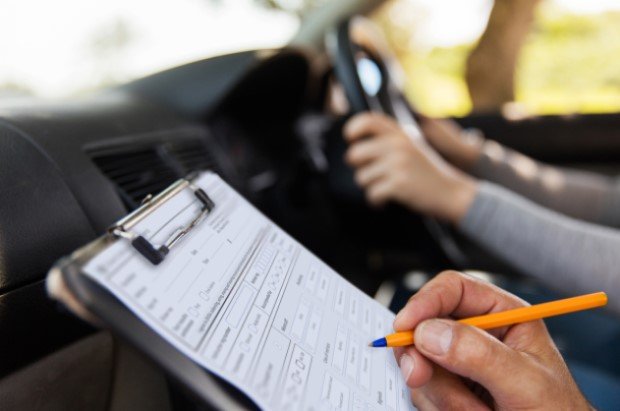
The test lasts about 40 minutes, including around 20 minutes of independent driving. Usually you follow a sat nav the examiner provides; sometimes you follow traffic signs instead.
- Drive like you do in lessons. The examiner wants to see safe, normal driving, not perfect driving. You don’t need to exaggerate mirror checks.
- Ask if you’re not sure. You can ask the examiner to repeat a direction. Going the wrong way isn’t a fault on its own if you do it safely.
- Take your time. Waiting for a safe gap is better than rushing. Holding back when it was clearly safe to go can be marked, so aim for steady and sensible.
- Don’t try to guess the marks. If you think you’ve made a mistake, let it go and focus on the next junction. Many people who think they’ve failed actually pass.
- Bring someone if it helps. Your instructor (or another person over 16) can sit in the back during the test. Many learners find it calming.
What Counts as a Fail
You fail if you get more than 15 driving faults (minor faults) or one serious or dangerous fault. A single small error, like a slightly late signal, won’t fail you on its own.
Knowing this takes a lot of pressure off. Read the most common reasons in why people fail the driving test.
If You Don’t Pass
Lots of good drivers don’t pass first time. You’ll get a debrief and a sheet showing your faults. Use it with your instructor to focus your next lessons, and rebook when you’re ready. You have to wait at least 10 working days before you can retake the test.
Feel Confident With Astra
Our patient, DVSA-approved instructors are used to nervous learners. We offer mock tests, test-route practice and a warm-up lesson before your test, in manual or automatic cars across Greater Manchester, from £35 an hour, 7 days a week.
Fill in the form and we’ll match you with an instructor near you, or call 07758 837589.
Sources
Safe Driving for Life (DVSA): taking your practical driving test and GOV.UK: what happens during the driving test. Checked 10 November 2026.
FAQs: Driving Test Nerves
Is it normal to be nervous before a driving test?
Yes, almost everyone is. Being properly prepared, doing a mock test and knowing what will happen are the best ways to keep nerves under control.
How many minor faults can you get and still pass?
Up to 15 driving faults. One serious or dangerous fault means a fail.
Can my instructor sit in on my driving test?
Yes. Your instructor or another person over 16 can sit in the back during the test, and many learners find it calming.
What if I go the wrong way on my test?
Going the wrong way is not a fault on its own if you do it safely. You can ask the examiner to repeat directions.
Should I have a lesson before my driving test?
Many learners book a one- or two-hour lesson straight before the test to warm up and settle nerves.