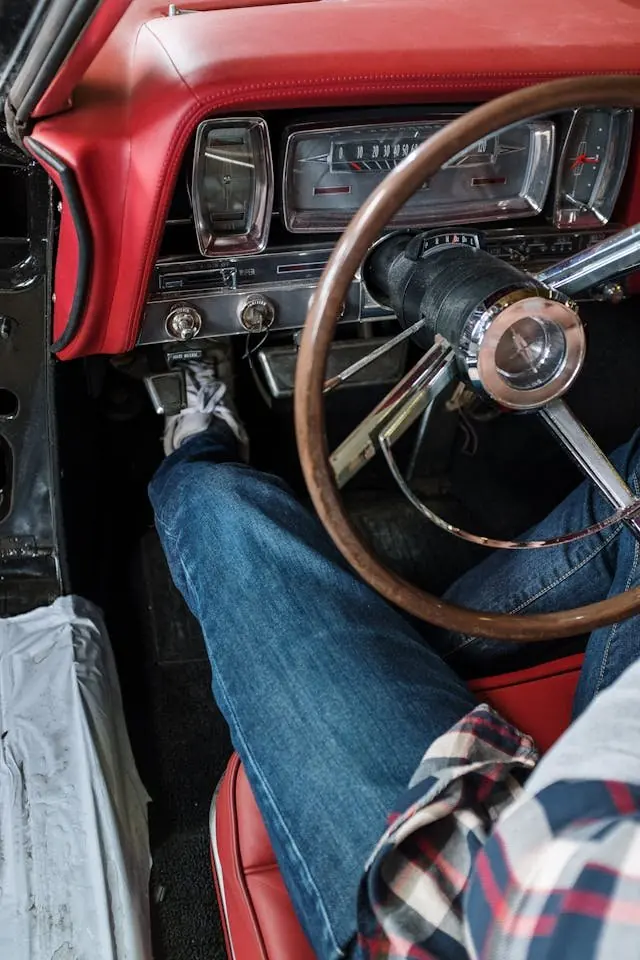

To do a hill start in a manual car: set the handbrake, press the clutch, select first gear, add a little more gas than on the flat, bring the clutch up to the biting point and hold it, do your all-round checks, then release the handbrake and gently raise the clutch as you add gas. It’s the moving-off routine from Lesson 2, with more gas and a firmer biting point.
Lesson Journey: this guide is part of our lesson-by-lesson series for learner drivers.
- Lesson 1: The cockpit drill (DSSSM)
- Lesson 2: Moving off and stopping
- Lesson 3: Turning left (MSPSL)
- Lesson 4: Turning right (MSPSL)
- Lesson 5: Turning left at traffic lights
- Lesson 6: Turning right at traffic lights
- Lesson 7: Roundabouts
- Lesson 8: Multi-lane and spiral roundabouts
- Lesson 9: Emerging from junctions
- Lesson 10: Crossroads
- Lesson 11: Pedestrian crossings
- Lesson 12: Meeting traffic and passing parked cars
- Lesson 13: Hill starts (you are here)
- Lesson 14: Dual carriageways
- Coming next: manoeuvres (parallel parking, bay parking, pulling up on the right) and the emergency stop
Next: Dual carriageways →
Uphill Start, Step by Step (Manual)
- Prepare: clutch down, first gear, then press the gas a little more than you would on level ground.
- Find the biting point: raise the clutch slowly until the engine note drops and the front of the car dips slightly. Hold your feet still.
- Observe: check your mirrors and blind spot over your right shoulder. Signal only if it would help someone.
- Go: when it’s safe, release the handbrake. The car should stay still or creep forward. Then add a bit more gas and slowly bring the clutch up.
- If you start to roll back: don’t panic. Push the clutch down, use the footbrake, re-apply the handbrake and start again.
Downhill Start
- Clutch down and select first gear (or second on a steep slope, if your instructor suggests it).
- Keep your foot on the footbrake and release the handbrake.
- After your observations, take your foot off the brake and let the car roll gently while you bring the clutch up smoothly. You need little or no gas.
Hill Starts in an Automatic
Automatics are much easier on hills. Many cars also have hill-start assist, which holds the brakes for a moment while you move your foot to the accelerator. Select D, keep your foot on the brake, release the parking brake, do your checks, then move your foot to the accelerator. Learn more in how to drive an automatic car.
Common Mistakes
- Not enough gas, so the car stalls as the handbrake comes off.
- Lifting the clutch too quickly, causing a jerk or stall.
- Releasing the handbrake before finding the biting point, so the car rolls back.
- Rushing the observations because you’re worried about holding the car.
Why it matters on test day: not moving off safely is the 3rd most common reason people fail, and the examiner may ask you to pull up and move off on a hill. See the top 10 reasons people fail.
Next: faster roads, in Lesson 14: dual carriageways.
Learn It Properly With Astra
Our instructors know the steep streets around Greater Manchester, from Oldham to Stalybridge, and will build your hill starts step by step. Manual and automatic lessons across Greater Manchester, from £35 an hour, 7 days a week from 7am to 11:30pm.
Fill in the form and we’ll match you with an instructor near you, or call 07758 837589.
Sources
The Highway Code, GOV.UK. Checked 12 November 2026. Routines like DSSSM and MSPSL are how instructors teach the Highway Code; your instructor may use a slightly different version.
FAQs: Hill Starts
How do I stop rolling back on a hill start?
Find the biting point and add a little more gas before you release the handbrake. If you do start rolling, press the clutch and footbrake and start again.
Do I need the handbrake for a hill start?
In a manual car it’s the safest way for learners. Some cars have hill-start assist, but your instructor will teach the handbrake method first.
Can I do a hill start in an automatic?
Yes, and it’s easier. Keep your foot on the brake, release the parking brake, then move to the accelerator. Many automatics hold the car for you briefly.
Will I have to do a hill start on my driving test?
You may be asked to pull up and move off again, which can be on a hill. You need to show you can move off safely and under control.