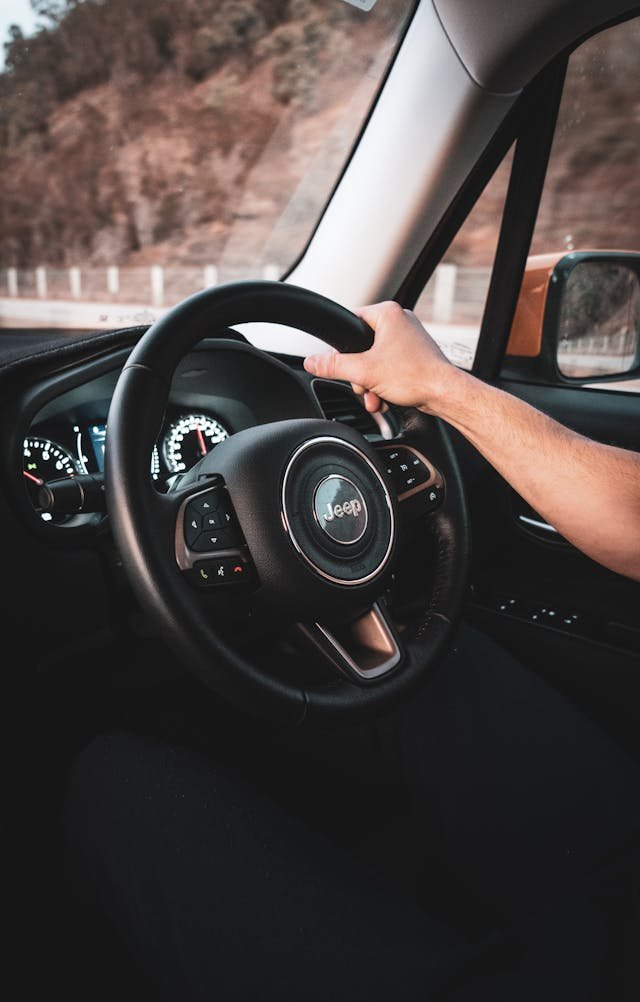

To do an emergency stop, react quickly, brake firmly and progressively, keep both hands on the wheel, and press the clutch down just before you stop (in a manual) so you don’t stall. Once stopped, put the handbrake on and select neutral, then do full all-round checks, including both blind spots, before you move off again. The examiner will tell you beforehand, then give the signal by raising a hand and saying “stop”.
Lesson Journey: this guide is part of our lesson-by-lesson series for learner drivers.
- Lesson 1: The cockpit drill (DSSSM)
- Lesson 2: Moving off and stopping
- Lesson 3: Turning left (MSPSL)
- Lesson 4: Turning right (MSPSL)
- Lesson 5: Turning left at traffic lights
- Lesson 6: Turning right at traffic lights
- Lesson 7: Roundabouts
- Lesson 8: Multi-lane and spiral roundabouts
- Lesson 9: Emerging from junctions
- Lesson 10: Crossroads
- Lesson 11: Pedestrian crossings
- Lesson 12: Meeting traffic and passing parked cars
- Lesson 13: Hill starts
- Lesson 14: Dual carriageways
- Lesson 15: Driving test manoeuvres
- Lesson 16: The emergency stop (you are here)
- Coming next: getting ready for your driving test
How It Works on the Test
Not every test has one. DVSA guidance tells examiners to do the emergency stop in about 1 in every 7 driving tests. The examiner will pull you over first, explain the exercise, and check behind before giving the signal, so you don’t need to check your mirrors before you brake.
Step by Step
- React: as soon as you hear “stop” and see the hand, move your right foot straight to the footbrake.
- Brake firmly: press hard and progressively. Most cars have ABS, which lets you keep steering while braking hard. Don’t pump the pedal.
- Clutch down late (manual): press the clutch just before the car stops, so the engine helps you slow down and doesn’t stall.
- Keep straight: both hands on the wheel, keep the car straight.
- Secure the car: handbrake on, neutral, then relax for a moment.
- Move off safely: check all your mirrors and both blind spots, because you’re in the middle of the road, not at the side. This is where many learners lose marks.
Stopping Distances
Highway Code rule 126 gives typical stopping distances for a car on a dry road (thinking distance plus braking distance):
- 20mph: 12 metres (about three car lengths)
- 30mph: 23 metres (about six car lengths)
- 40mph: 36 metres
- 50mph: 53 metres
- 60mph: 73 metres
- 70mph: 96 metres
On wet roads stopping distances are at least double, and up to ten times longer on ice. That’s why keeping a safe gap matters more than braking skill.
Common Mistakes
- Reacting slowly, or braking too gently.
- Pressing the clutch too early, which makes the car coast and stop further away.
- Stalling, then rushing to restart without securing the car.
- Moving off without checking the blind spots, which is the most common fault after an emergency stop.
Why it matters on test day: moving off safely is the 3rd most common reason people fail. See the top 10 reasons people fail.
That’s the end of the core skills. Back to the Lesson Journey, or read what happens on your driving test.
Learn It Properly With Astra
Our instructors practise the emergency stop on quiet roads first, so you’re confident before test day. Manual and automatic lessons across Greater Manchester, from £35 an hour, 7 days a week from 7am to 11:30pm.
Fill in the form and we’ll match you with an instructor near you, or call 07758 837589.
Sources
The Highway Code, GOV.UK. Checked 12 November 2026. Routines like DSSSM and MSPSL are how instructors teach the Highway Code; your instructor may use a slightly different version.
FAQs: The Emergency Stop
Is the emergency stop on every driving test?
No. DVSA guidance for examiners says it is done in about 1 in every 7 tests.
Should I check my mirrors before an emergency stop?
No. In a real emergency there’s no time, and on the test the examiner checks behind before giving the signal. Check all around before you move off afterwards.
Should I press the clutch first in an emergency stop?
No. Brake first, and press the clutch just before the car stops, so you don’t stall.
What is the stopping distance at 30mph?
About 23 metres on a dry road, according to the Highway Code: 9 metres thinking distance and 14 metres braking distance.