
How to Change Gear in a Manual Car: Gears Explained
A manual car has a clutch pedal and a gear lever. Low gears give you more pulling power for moving off and climbing hills; high gears let you travel faster using less fuel. Changing gear smoothly comes with practice, and your instructor will build it up step by step.
How Gears Work
- 1st gear: for moving off and very slow speeds.
- 2nd gear: for slow driving, tight turns and junctions.
- 3rd and 4th gears: for most town and suburban roads.
- 5th and 6th gears: for faster roads, dual carriageways and motorways.
- Reverse: for going backwards. Only select it when the car has stopped.
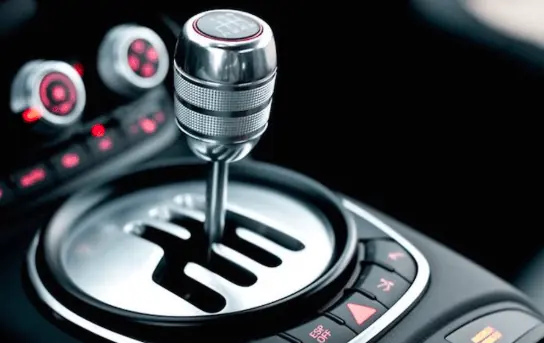
As a rough guide, many cars change up at around 10, 20, 30 and 40mph, but every car is different. Listen to the engine: if it sounds strained or is labouring, change down; if it is revving high, change up. The gear pattern is usually printed on top of the gear lever.
How to Change Up a Gear, Step by Step
- Check your mirrors and plan ahead.
- Press the clutch pedal all the way down with your left foot and ease off the accelerator at the same time.
- Move the gear lever into the next gear, with your palm facing the direction you are moving it.
- Bring the clutch up smoothly while gently pressing the accelerator.
- Put your hand back on the steering wheel.
How to Change Down a Gear
Change down when you slow down, approach a hazard or climb a hill. Brake first to the right speed, then press the clutch down, select the lower gear and bring the clutch up smoothly. You don’t have to go through every gear: if you slow from 40mph to 15mph, you can go straight from 4th to 2nd. This is called block changing and is perfectly fine on the driving test.
Common Gear Mistakes Learners Make
- Looking down at the gear lever instead of at the road. Practise until you can find each gear by feel.
- Coasting: holding the clutch down or rolling in neutral, which reduces your control. The Highway Code warns against it.
- Riding the clutch: resting your foot on the pedal, which wears it and makes control harder.
- Stalling from bringing the clutch up too quickly. Find the biting point and be gentle.
- Staying in a high gear on a hill, which makes the engine labour.
Manual or Automatic?
An automatic changes gear for you, so there is no clutch pedal, just P (park), R (reverse), N (neutral) and D (drive). It’s easier to learn, but if you pass in an automatic, your licence only lets you drive automatics. Pass in a manual and you can drive both. Read more in manual or automatic lessons, or see our automatic driving lessons.
More free help: learner resource hub · theory test practice · lesson-by-lesson guides · driving test readiness checklist.
Learn With Astra Driving School
Not sure about gears yet? That’s what lessons are for. Astra has DVSA-approved instructors across Greater Manchester and the rest of the UK, teaching manual and automatic lessons 7 days a week from 7am to 11:30pm. Lessons are £35 an hour in Greater Manchester and £40 an hour elsewhere. Fill in the form and we’ll match you with an instructor near you, or call 07758 837589.
Questions and Answers
What gear should I be in at 30mph?
Usually 3rd or 4th, depending on the car and the road. Listen to the engine and change up if it is revving high, or down if it is labouring.
Can I skip gears when changing down?
Yes. Going straight from 4th to 2nd when you have slowed down is called block changing, and it is allowed on the driving test.
Will I fail my test for stalling?
Not on its own. A stall is usually a minor fault if you deal with it safely. It becomes serious if it causes danger, for example stalling repeatedly at a busy junction.